CNCF Expands Cloud Native Ecosystem as SoftBank and Crusoe Join to Advance Sovereign AI Infrastructure

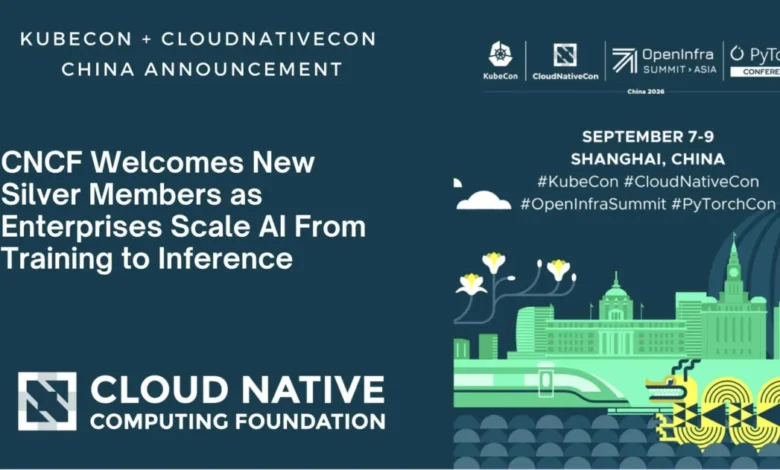
The Cloud Native Computing Foundation (CNCF), the primary steward of the open-source software that powers the modern internet, announced today the addition of nine new Silver members to its global ecosystem. This expansion, formalized at the combined KubeCon + CloudNativeCon + OpenInfra Summit + PyTorch Conference in Shanghai on September 8, 2026, marks a pivotal moment for the foundation. Among the new entrants are telecommunications giant SoftBank Corp. and specialized AI infrastructure provider Crusoe, both of which bring significant technical weight to an organization already supporting over 800 member companies and 300,000 contributors across more than 250 projects.
The influx of new members arrives at a critical juncture for the global technology industry. As enterprises shift their focus from the initial experimentation phase of artificial intelligence to the high-stakes, 24/7 reality of production-grade inference, the demand for efficient, secure, and sovereign infrastructure has reached an all-time high. The CNCF’s latest cohort is strategically aligned with these market pressures, focusing on sectors ranging from autonomous code optimization and open-source data retrieval to cloud hosting and infrastructure efficiency.
A Strategic Pivot Toward Production AI
The transition from "AI hype" to "AI utility" has fundamentally altered how platform engineering teams approach their work. For years, the industry focused on training large language models (LLMs) using massive, centralized compute clusters. However, the current trend is characterized by the migration of these models into production environments where latency, cost, and data sovereignty are paramount.
Jonathan Bryce, executive director of the CNCF, emphasized that the primary engineering challenge for 2026 and beyond is not merely acquiring more compute, but extracting greater utility from existing assets. "Open source communities are currently building the orchestration, observability, and infrastructure layers required to maximize resource utilization," Bryce noted. "By integrating organizations like SoftBank and Crusoe, we are strengthening the community’s ability to build production-scale AI infrastructure that is both accessible and highly efficient."
The inclusion of telecommunications and specialized AI infrastructure firms suggests that the cloud-native ecosystem is moving closer to the network edge. As data sovereignty becomes a legal and operational mandate for global organizations, the ability to run cloud-native stacks within private or sovereign environments—rather than relying solely on monolithic public cloud providers—has become a top priority for corporate IT leaders.
Chronology of CNCF Growth and Maturity
To understand the significance of this expansion, one must look at the trajectory of the CNCF over the last decade. Founded in 2015 under the umbrella of The Linux Foundation, the CNCF began with the primary goal of establishing Kubernetes as the standard for container orchestration.
- 2015–2017: The foundational years, marked by the rapid adoption of Kubernetes and the establishment of the Cloud Native ecosystem.
- 2018–2020: The era of diversification, where the CNCF expanded its project portfolio to include observability tools like Prometheus and service meshes like Envoy.
- 2021–2023: The period of global scaling, as cloud-native methodologies became the standard for enterprise digital transformation and hybrid cloud architectures.
- 2024–2026: The current "AI-Native" phase, where the foundation has shifted its focus toward integrating AI/ML workloads into the existing cloud-native stack, emphasizing efficiency and performance.
This latest membership expansion is a continuation of the 2026 mandate to stabilize the "AI stack." By bringing in new members that specialize in infrastructure efficiency, the CNCF is effectively creating a standardized framework for AI operations, similar to how it previously standardized container orchestration.
Supporting Data and Industry Context
The CNCF’s growth is not occurring in a vacuum. Industry analysts have noted that global spending on cloud-native technologies is projected to maintain a compound annual growth rate (CAGR) of over 20% through 2030. According to recent reports from the Cloud Native Computing Foundation’s annual survey, nearly 90% of organizations now utilize containers in production, with a growing majority of these organizations managing their infrastructure via open-source tools hosted by the CNCF.
Furthermore, the shift toward "sovereign infrastructure"—defined as systems that allow data to remain within specific geographic or regulatory borders while benefiting from cloud-native agility—is a direct response to tightening global data privacy regulations. SoftBank’s involvement, in particular, signals that large-scale telecommunications providers are looking to integrate 5G and AI at the edge using open-source, vendor-neutral software.
The total value of benefits provided to Silver members, estimated at over $300,000 per organization, underscores the value proposition of the foundation. Members gain access to exclusive educational subscriptions, legal protection through the Linux Foundation’s umbrella, and, most importantly, a seat at the table in working groups that define the future of cloud computing.
Implications for the Open Source Community
The integration of these new members has several immediate and long-term implications for the tech industry:
- Standardization of AI Operations (AIOps): With more companies joining from the infrastructure side, the CNCF is likely to accelerate the development of standard interfaces for AI models. This will reduce vendor lock-in and allow developers to move AI workloads between different cloud environments with ease.
- Increased Focus on Energy Efficiency: As the environmental impact of large-scale AI compute becomes a focal point for regulators, the expertise brought by infrastructure-focused firms like Crusoe will be vital. Their work in optimizing underutilized compute resources is expected to feed into new CNCF projects aimed at reducing the carbon footprint of data centers.
- Cross-Pollination of Technologies: By bridging the gap between traditional telecommunications and modern AI infrastructure, the CNCF creates an environment where cross-industry collaboration is the norm. This is expected to yield new innovations in edge computing, where AI inference occurs closer to the end user, reducing latency and bandwidth costs.
Official Stances and Industry Responses
While the individual representatives from the new member organizations have not yet issued granular technical roadmaps, the collective sentiment from the Shanghai summit suggests a shared commitment to "open-first" development. Leaders within the CNCF technical oversight committee have pointed out that the diversity of the new member cohort—which includes startups and established global corporations—is essential for preventing the stagnation of open-source standards.
"The strength of the CNCF lies in its diversity," said one industry consultant present at the summit. "When you have a company like SoftBank working alongside specialized AI infrastructure providers, you get a holistic view of the stack. It’s not just about the code; it’s about how that code interacts with physical hardware, network limitations, and global regulatory frameworks."
The Path Forward
As the CNCF looks toward the remainder of 2026 and into 2027, the focus will likely remain on integrating the new member contributions into existing projects like Kubernetes, KubeEdge, and various AI-focused sandboxes. The foundation’s role as a neutral arbiter of technology has never been more important as geopolitical tensions influence the development of proprietary versus open-source AI stacks.
By maintaining a vendor-neutral stance, the CNCF ensures that the infrastructure of the future remains a public good. The addition of nine new members is a testament to the fact that, despite the complexity of modern AI systems, the industry remains committed to the principle that open source is the most reliable, efficient, and secure way to build the next generation of digital infrastructure.
For organizations interested in following the path of these new members, the CNCF continues to offer a structured entry point through its membership tiers. With the ongoing expansion of its project ecosystem and its increasing role in the global AI conversation, the foundation remains the bedrock upon which the future of cloud computing is being built. As companies navigate the complexities of production-scale AI, the CNCF provides the necessary scaffolding to turn technical potential into tangible business results.
Related posts: